In the fast-paced world of modern construction and event management, the implementation of effective temporary barriers has become a cornerstone of site safety and crowd control. These modular systems are not merely physical obstructions but are strategic tools designed to manage flow, protect high-value assets, and ensure the wellbeing of both workers and the general public. By providing a flexible yet sturdy perimeter, they allow for the dynamic reconfiguration of spaces in response to evolving project needs.
Globally, the demand for high-quality temporary fencing solutions is surging as urban infrastructure projects increase in complexity. Whether it is managing a high-traffic music festival or securing a multi-million dollar skyscraper construction site, the ability to deploy rapid-response containment systems is essential. The integration of galvanized steel and advanced coating technologies has transformed these barriers from simple poles and mesh into long-term, reusable assets that reduce waste and operational costs.
Understanding the nuances of choosing the right barrier—balancing wind resistance, security levels, and ease of installation—can mean the difference between a seamless operation and a costly safety breach. This guide explores the technical specifications, global applications, and innovative trends shaping the industry, providing a comprehensive blueprint for professionals seeking to optimize their perimeter security through advanced temporary barriers.
Global Industry Context of Temporary Barriers
On a global scale, the utilization of temporary barriers is intrinsically linked to the growth of the global construction market. According to industry trends aligned with ISO safety standards, the implementation of standardized perimeter control significantly reduces on-site accidents by creating clear boundaries between hazardous work zones and public walkways. As cities densify, the "zero-accident" mandate has pushed contractors toward higher-grade modular fencing that can be deployed in hours rather than days.
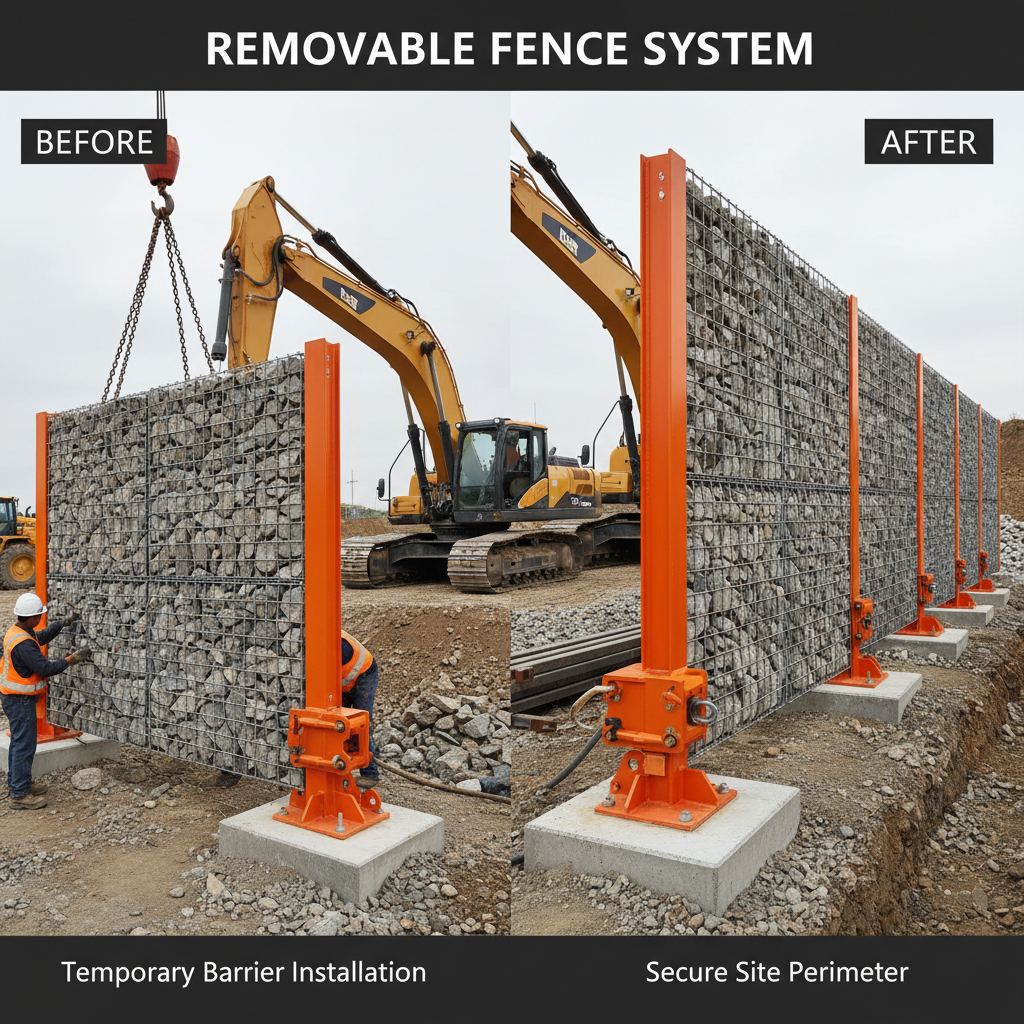
The challenge today lies in the tension between rapid deployment and structural integrity. In regions prone to extreme weather, such as the coastal areas of Southeast Asia or the gusty plains of North America, standard barriers often fail due to wind load. This has led to a shift toward weighted base systems and interlocking mechanisms that ensure the fence line remains intact under pressure, preventing unauthorized access and ensuring compliance with local municipal safety codes.
Defining Modern Temporary Barrier Systems
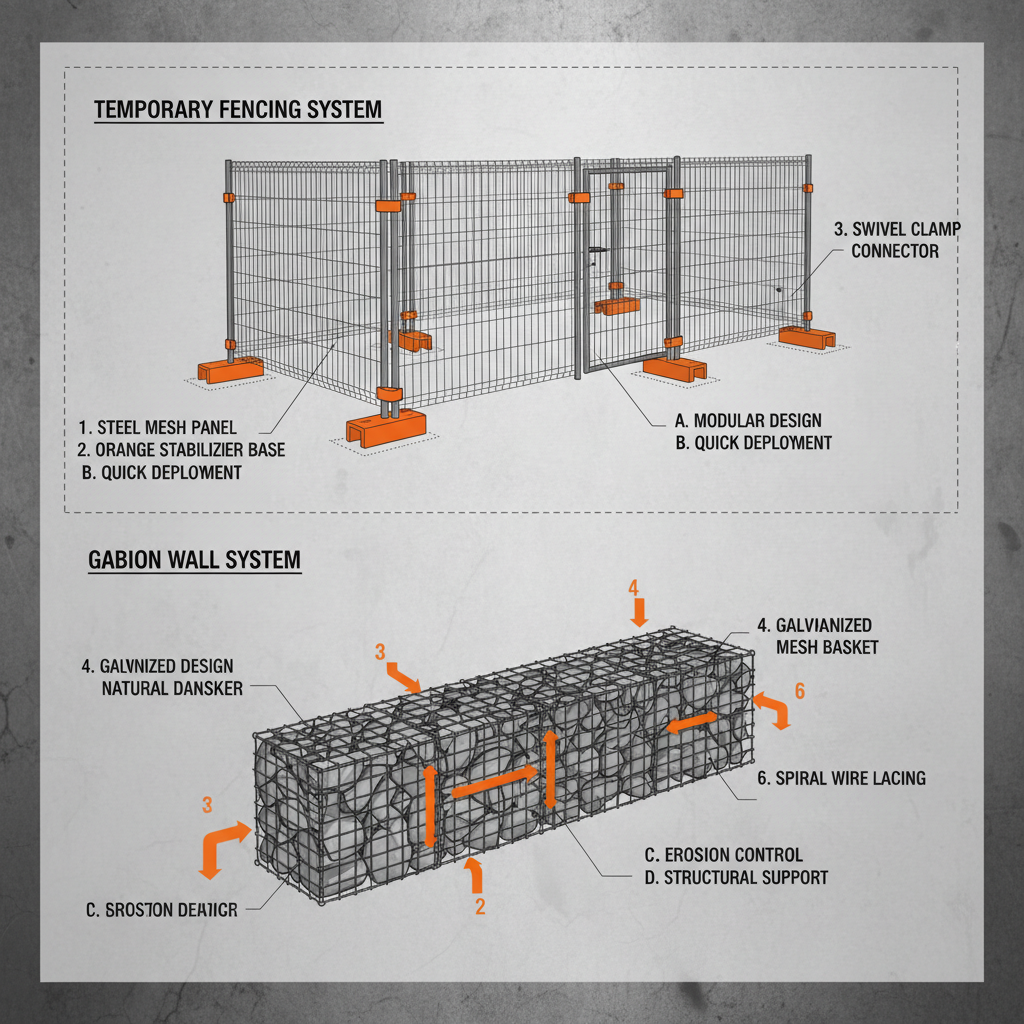
At its most fundamental level, temporary barriers are modular, portable partitioning systems designed to provide short-to-medium term security, guidance, or protection. Unlike permanent welded fences, these systems emphasize versatility and reuse. They typically consist of prefabricated panels—often made from galvanized steel wire mesh—that connect via clamps or hooks, allowing for a continuous line of defense that can be dismantled and transported with minimal effort.
In the context of modern industry, these systems serve as critical infrastructure for "pop-up" security. From Livestock Fence Panels used in agricultural rotations to high-security Welded Fence segments for industrial sites, the definition of a barrier has expanded to include not just physical exclusion, but visual communication. A well-placed barrier signals a "restricted zone," reducing the liability of the site owner by clearly defining the limits of safe passage.
Beyond commercial use, there is a growing humanitarian application for these systems. In post-disaster relief operations, temporary barriers are used to organize aid distribution centers, create safe perimeters around field hospitals, and manage the flow of displaced populations. The ability to rapidly create order out of chaos makes these tools indispensable for NGOs and international governmental organizations operating in volatile environments.
Core Components for Maximum Stability
The effectiveness of temporary barriers relies heavily on the quality of their materials. The primary component is the panel, usually constructed from high-tensile steel wire. The gauge of the wire determines the barrier's strength, while the galvanization process ensures that the structure resists corrosion in humid or salty environments, extending the lifecycle of the product across multiple projects.
Equally important is the support mechanism. Whether using concrete blocks, plastic weighted feet, or driven Fence Posts, the foundation must counteract lateral forces. Innovative interlocking clamps have replaced traditional ties, allowing for a tighter fit between panels that prevents "gap-creep," a common failure point where gaps open up over time, compromising the security of the perimeter.
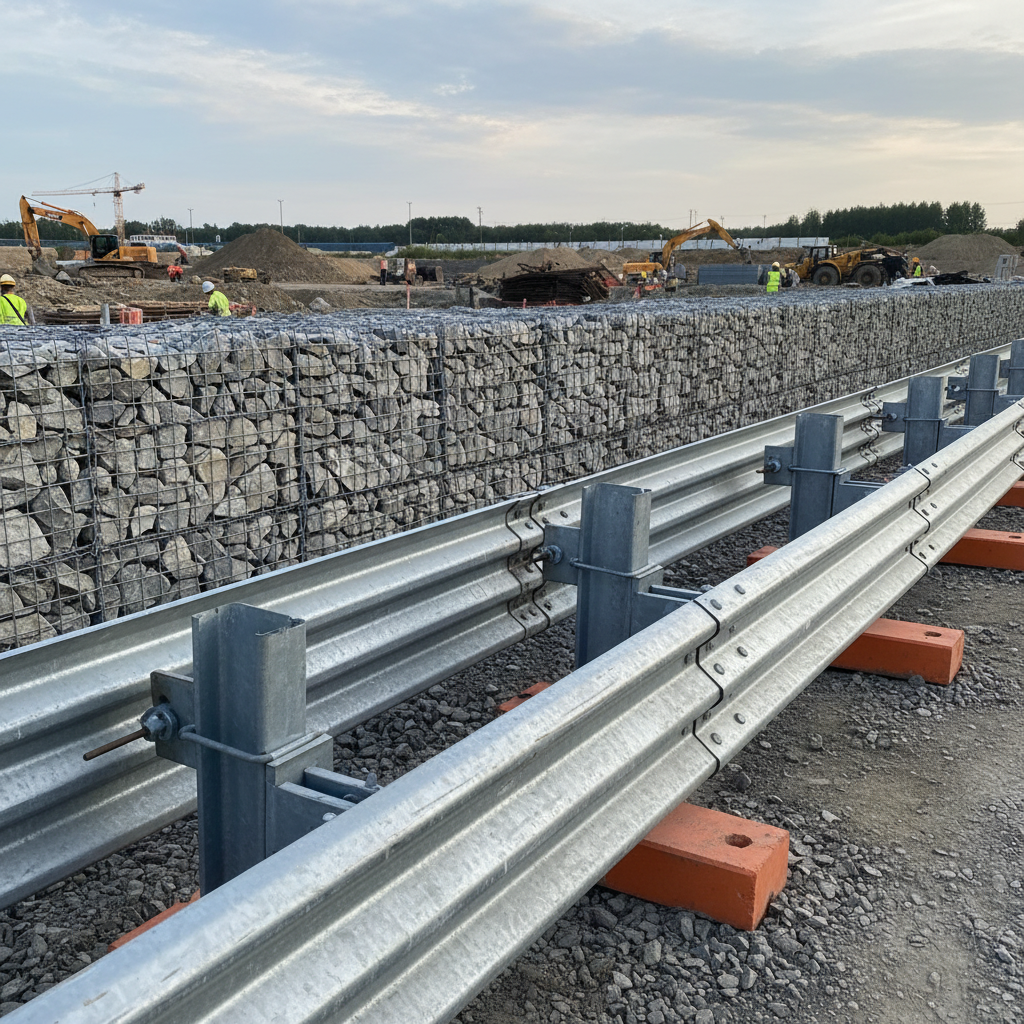
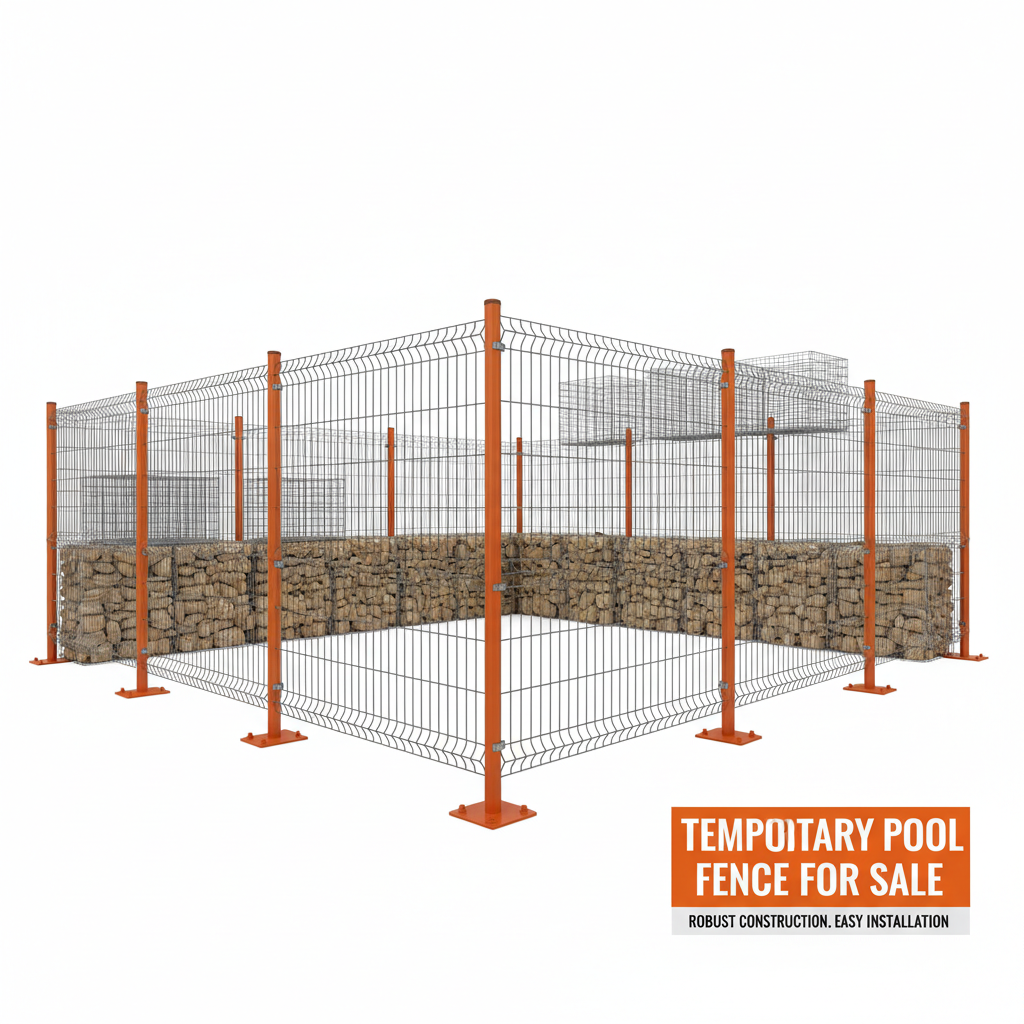
Lastly, scalability is achieved through modularity. By utilizing standardized heights and widths, users can mix and match different barrier types—such as combining Gabion Baskets for erosion control at the base with mesh panels for height—to create a hybrid defense system. This flexibility ensures that the barrier can adapt to uneven terrain without requiring custom fabrication, which would otherwise slow down deployment.
Performance Metrics and Efficiency
Evaluating the performance of temporary barriers requires a look at installation speed versus structural rigidity. A high-performance system is one that minimizes the "man-hours per linear meter" while maximizing the resistance to external pressure. For instance, a clip-on system is significantly faster than a bolt-on system, but the latter offers superior stability for long-term installations.
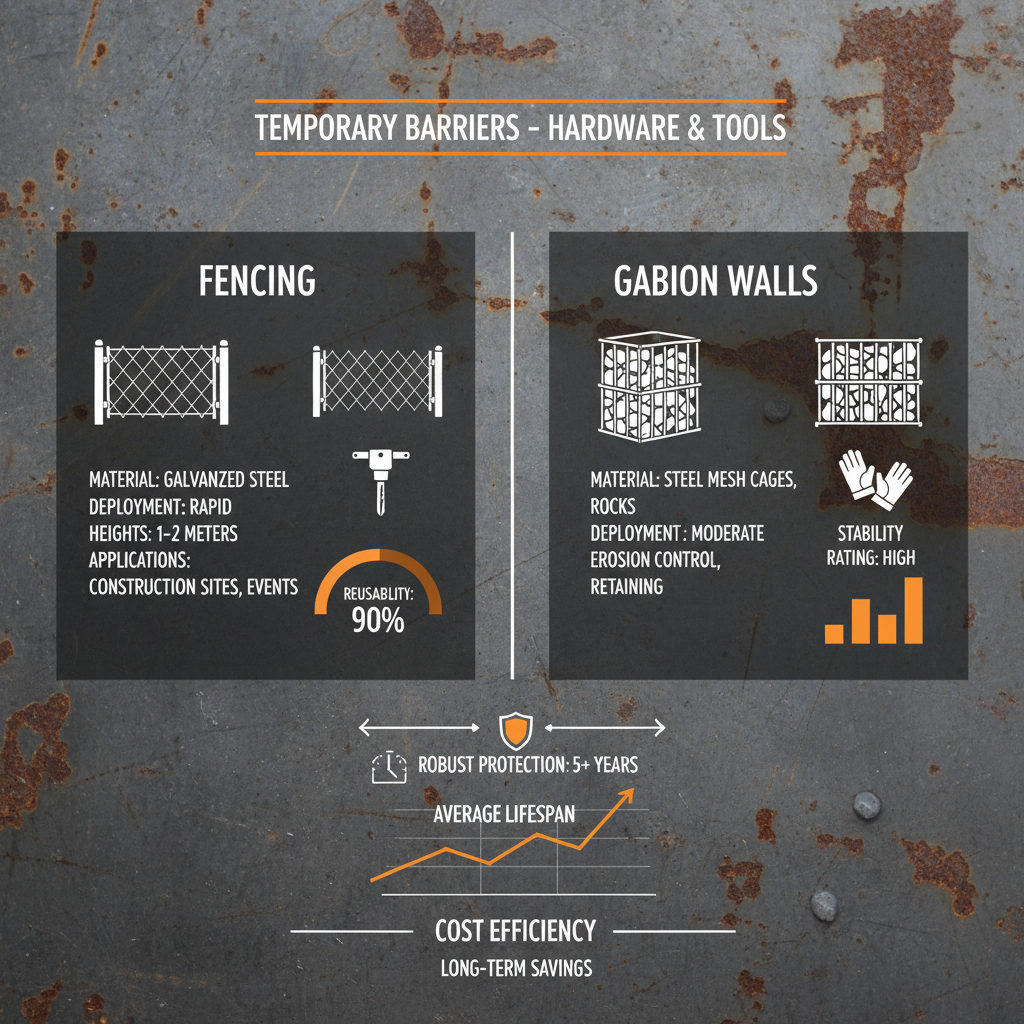
When comparing different modular approaches, the industry looks at weight-to-strength ratios. Lightweight aluminum alloys offer ease of transport but may buckle under high wind loads, whereas heavy-duty galvanized steel provides the necessary mass to keep the perimeter secure in exposed areas. The following data illustrates the comparative effectiveness of different barrier configurations based on industry benchmarks.
Comparative Effectiveness of Temporary Barrier Configurations
Global Applications and Real-World Use Cases
In the realm of large-scale events, such as the Olympic Games or World Cup, temporary barriers are used to create complex "zoning" maps. These zones separate athletes, VIPs, and general spectators, ensuring a controlled flow of people that prevents overcrowding and stampedes. The ability to quickly pivot the layout of these barriers allows security teams to respond to real-time crowd dynamics, enhancing overall safety.
In remote industrial zones, such as mining sites in Australia or oil rigs in the Middle East, these barriers serve a more utilitarian purpose. They are used to demarcate hazardous blast zones or to protect sensitive equipment from wildlife and unauthorized personnel. In these harsh environments, the use of anti-corrosive coatings is non-negotiable, as the salinity and dust can degrade standard steel in a matter of weeks.
Long-Term Value and Sustainable Impact
The shift toward sustainable construction has placed a spotlight on the lifecycle of temporary barriers. Historically, low-grade barriers were treated as consumables—used for one project and then scrapped. However, the industry is now moving toward a "circular economy" model where high-quality galvanized panels are leased, refurbished, and redeployed. This not only reduces the carbon footprint associated with steel production but also lowers the overhead costs for contractors.
From a logical standpoint, the investment in premium modular systems pays for itself through durability. A high-grade barrier that can withstand 50 deployment cycles is infinitely more cost-effective than a cheap alternative that lasts only five. Furthermore, the reliability of these systems provides "emotional value" in the form of peace of mind; site managers can trust that their perimeter will not collapse during a storm or be easily breached by intruders.
Beyond the financial metrics, there is a social impact. In urban redevelopment, the use of professional, clean, and stable barriers improves the aesthetic of the construction site, reducing the "eyesore" effect on the local community. By incorporating privacy screening or branding onto the barriers, companies can transform a security necessity into a marketing opportunity, building trust and transparency with the public.
Future Trends in Perimeter Containment
The future of temporary barriers is being shaped by the integration of "Smart Perimeter" technology. We are seeing the emergence of barriers equipped with IoT sensors that can detect vibrations or breaches in real-time, sending instant alerts to security personnel. This transformation from passive physical walls to active digital monitors is revolutionizing how high-security sites are managed.
Material science is also evolving, with the introduction of carbon-fiber reinforced polymers and recycled ocean plastics. These new materials aim to provide the strength of steel with a fraction of the weight, making transportation more efficient and reducing the energy required for logistics. Additionally, modular designs are becoming more intuitive, with "tool-less" assembly systems that allow a single worker to secure a perimeter in half the time of traditional methods.
Sustainability policies are further driving innovation, with a push toward "Green Certification" for construction sites. This includes the use of eco-friendly powder coatings that eliminate VOC emissions. As automation grows, we may even see the deployment of robotic installation systems that can lay out kilometers of temporary fencing with millimeter precision, further reducing human error and labor costs.
Technical Analysis of Temporary Barrier Material and Application Dimensions
| Material Type |
Durability Score (1-10) |
Deployment Speed |
Primary Use Case |
| Galvanized Steel |
9 |
Medium |
Construction Sites |
| Powder Coated Mesh |
8 |
Fast |
Public Events |
| Aluminum Alloy |
7 |
Very Fast |
Temporary Exhibitions |
| Reinforced Polymer |
6 |
Fast |
Agricultural Zoning |
| Hybrid Gabion/Steel |
10 |
Slow |
Erosion/Security |
| High-Tensile Wire |
8 |
Medium |
Livestock Management |
FAQS
For high-wind environments, avoid lightweight panels and focus on systems with weighted base feet or those that can be securely anchored into the ground using Fence Posts. We recommend interlocking panels to distribute wind load across the entire line rather than on single points. Additionally, consider using a mesh with a larger aperture to allow wind to pass through more easily, reducing the "sail effect" that often leads to barrier collapse.
Yes, that is one of their primary advantages. High-quality galvanized steel barriers are specifically designed for longevity. To maximize their lifespan, we suggest a basic maintenance routine: cleaning the joints after each project and inspecting the galvanization for scratches. If the coating is damaged, a quick touch-up with cold-galvanizing spray can prevent rust from spreading, ensuring the panels remain viable for years of service across various sites.
The main difference lies in the installation and mobility. Temporary fences use modular panels and clamps for rapid deployment and removal, whereas permanent welded fences are typically cemented into the ground and cannot be moved without destruction. While permanent fences offer higher long-term security, temporary barriers provide the flexibility needed for construction phases, events, or shifting agricultural needs without permanently altering the land.
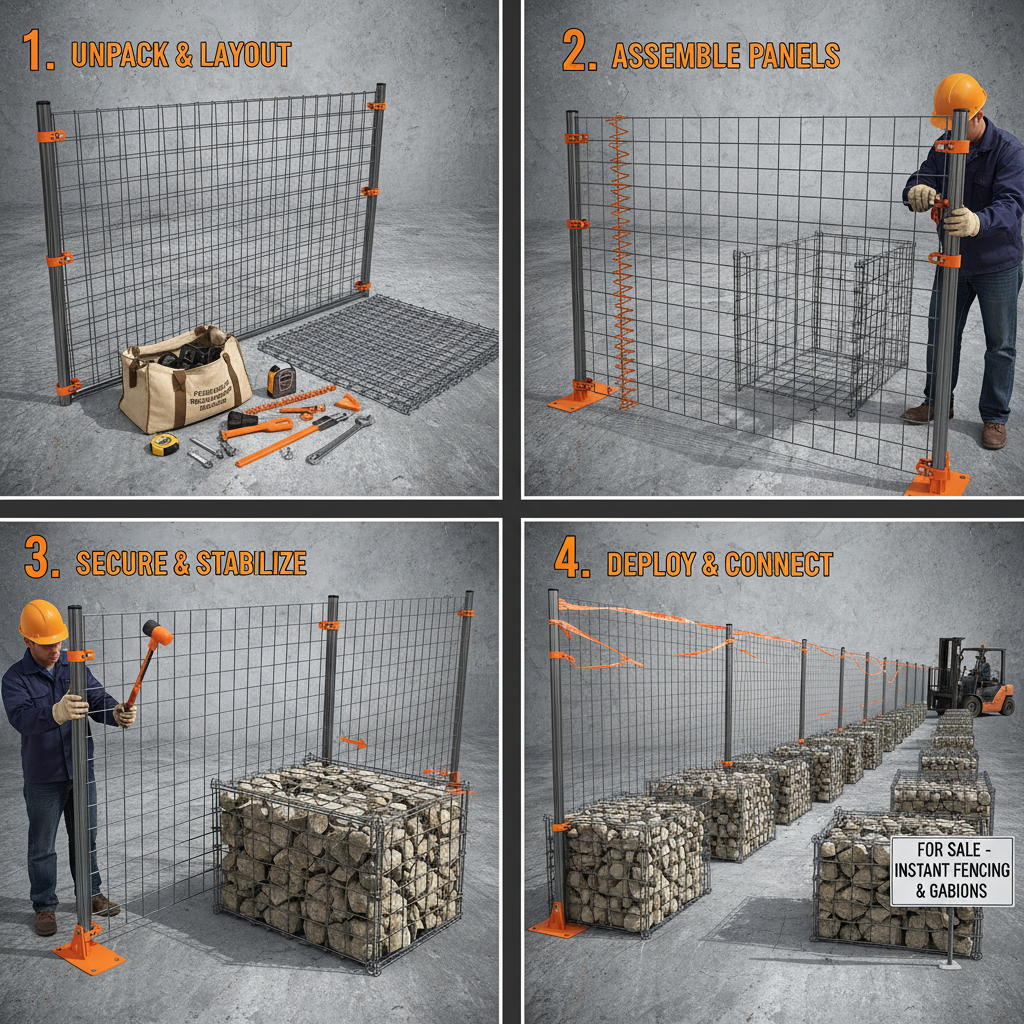
Installation time varies based on the system. For standard modular mesh panels, a trained two-person crew can typically install 50 to 100 linear meters per hour. Factors that may slow this down include uneven terrain, which requires more precise leveling of the base feet, or the addition of privacy screening and security toppings. Using tool-less interlocking systems is the best way to minimize deployment time.
Generally, yes. While steel production has an initial carbon cost, the extreme reusability of metal barriers makes them more sustainable than wooden hoarding, which often ends up in landfills after a single project. By opting for a lease-and-return model or investing in high-durability galvanized steel, companies significantly reduce timber waste and the environmental impact of repeated material procurement.
To prevent unauthorized access, you can add security attachments such as anti-climb mesh extensions or deterrent strips at the top of the panels. For higher-risk sites, integrating a dual-fence line (a double perimeter) with a "no-man's land" in between is highly effective. Additionally, using weighted bases that prevent the panels from being pushed over is a critical first step in securing any temporary perimeter.
Conclusion
In summary, temporary barriers are far more than simple fences; they are sophisticated tools for safety, logistics, and risk management. By balancing material strength, deployment speed, and structural stability, these systems allow industries to maintain secure environments while remaining agile. From the precision of galvanized steel mesh to the strategic use of modular components, the right choice of barrier ensures that operational goals are met without compromising the safety of personnel or the public.
Looking forward, the integration of smart technology and sustainable materials will continue to redefine the perimeter security landscape. For businesses and project managers, the key to success lies in moving away from "disposable" solutions and investing in high-quality, reusable systems that offer long-term value. By prioritizing durability and adaptability, you can ensure your sites remain secure, compliant, and efficient in an ever-changing global market. Visit our website: www.dqfences.com