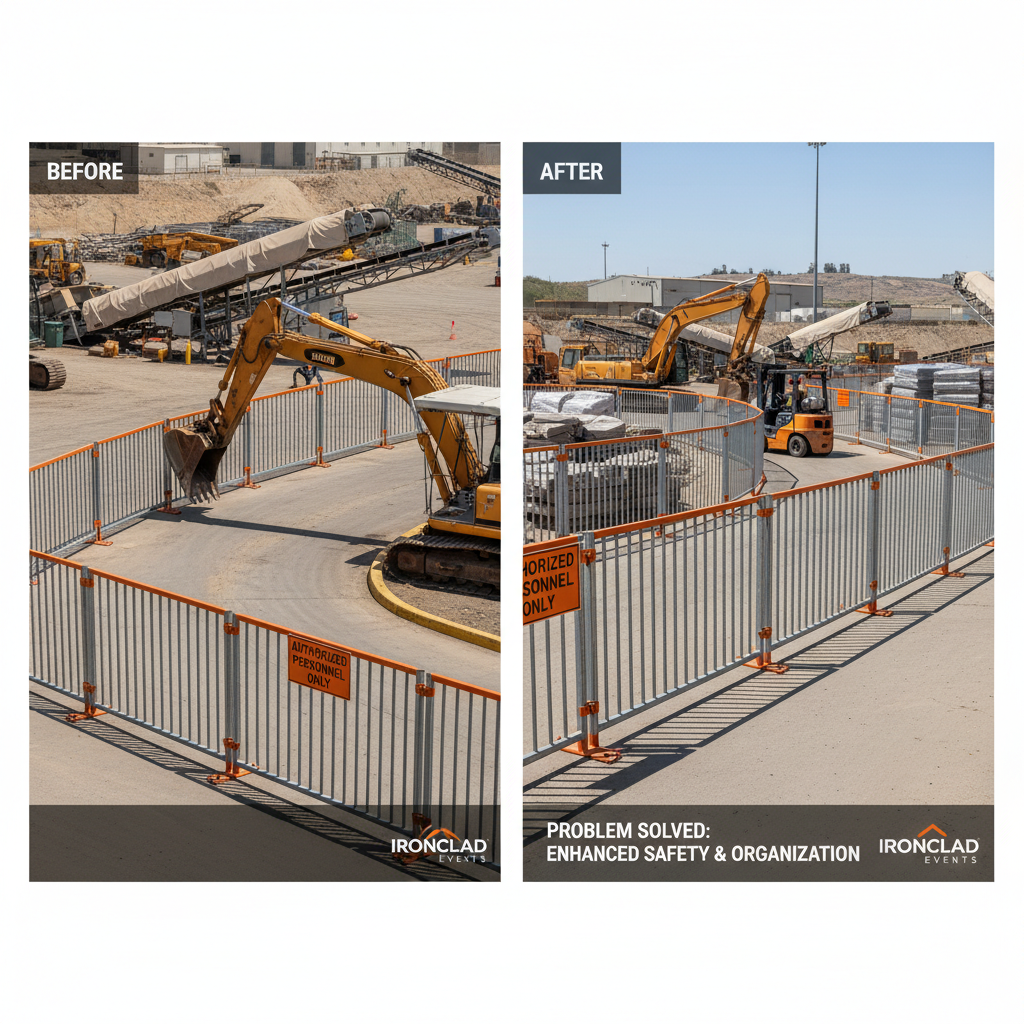
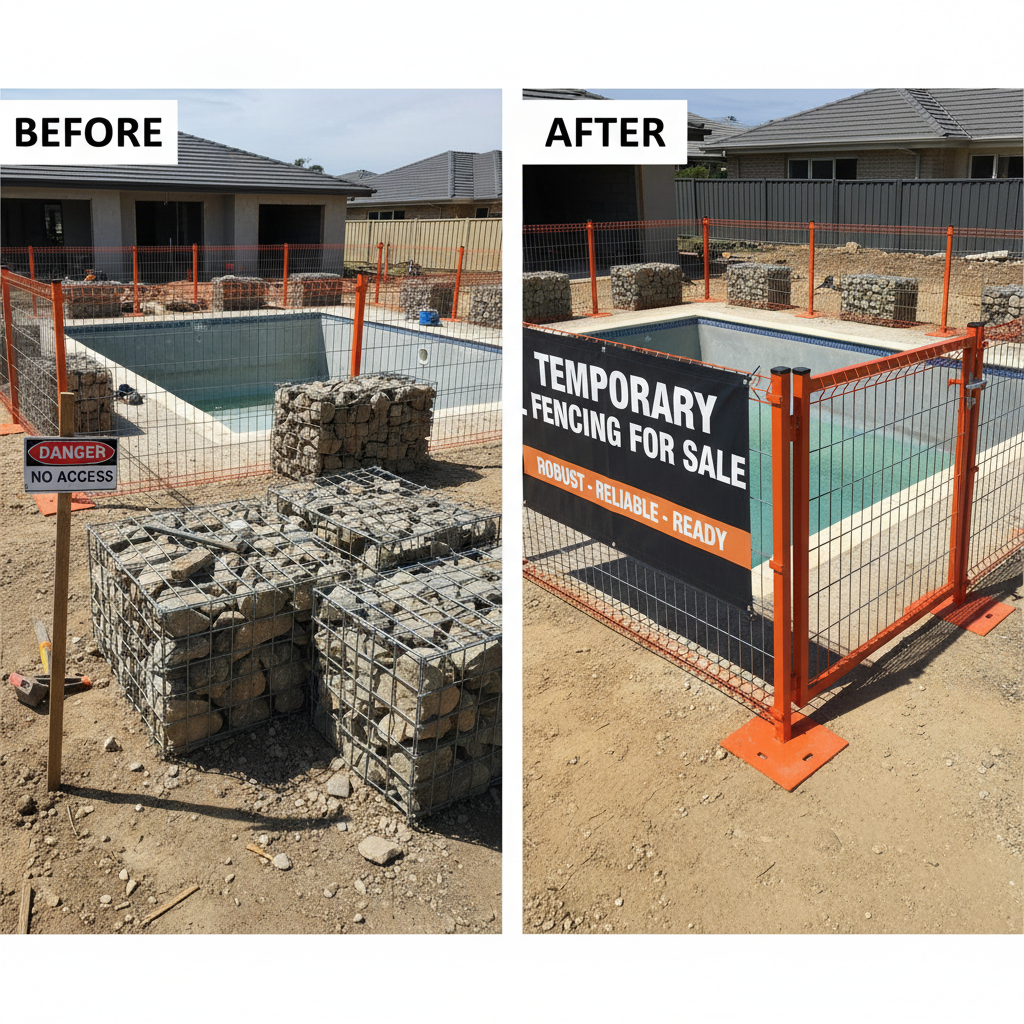
Securing a construction site or managing a large-scale public event requires more than just a physical barrier; it requires a strategic approach to site perimeter management. The choice of a temporary fencing system often dictates the efficiency of site access and the overall safety of the surrounding environment.
Across the industrial and civil engineering sectors, the shift toward modular and rapid-deploy systems has changed how project managers view site security. No longer viewed as a mere commodity, temporary barriers are now evaluated based on their wind resistance, ease of relocation, and durability under adverse weather conditions.
Selecting a reliable temporary fence company involves understanding the technical specifications of the materials used and how they align with the specific risk profile of a project. This analysis explores the critical factors in selecting temporary security solutions for modern infrastructure.


Temporary perimeter control is the first line of defense for any construction or event site. Unlike permanent installations, these systems must balance structural rigidity with the ability to be disassembled and relocated without compromising the material's integrity.
The primary objective is to define a clear boundary that prevents unauthorized entry while remaining visible enough to serve as a safety warning. In the context of professional metal fabrication, this involves a precise balance of wire gauge, mesh opening size, and frame stability.
A professional modular system consists of several critical components: the fence panels, the supporting posts, and the stabilization feet or clamps. The panel typically features a welded wire mesh core, which provides the necessary tension to prevent sagging over long distances. The gauge of the wire is a deciding factor in the fence's strength; thicker gauges offer higher impact resistance but increase the overall weight and transportation costs.
Supporting posts must be engineered to withstand lateral loads. Whether using embedded posts for semi-permanent setups or weighted bases for rapid deployment, the connection point between the panel and the post is a common failure point. High-quality systems utilize standardized clamps that allow for quick adjustment and secure locking, reducing the need for specialized tools during installation.
Beyond the structural frame, accessories such as privacy screening and wind-break fabrics are often added. These not only enhance security by obscuring the site's interior but also reduce the wind load on the structure, which is essential for maintaining stability during storm events in open-terrain environments.
Since temporary fences are exposed to various environmental stressors, the surface treatment of the metal is paramount. Most industrial-grade fences utilize galvanization to prevent oxidation. The choice between electro-galvanized and hot-dipped galvanized coatings depends entirely on the expected duration of the deployment and the salinity of the environment.
The effectiveness of a barrier in adverse weather is determined by its coating thickness; hot-dipped galvanization provides a superior zinc layer that chemically bonds to the steel, offering significantly higher corrosion resistance than electro-galvanized alternatives.
For specialized applications, PVC coating is applied over the galvanized layer. This dual-layer protection is particularly useful in agricultural settings or high-humidity coastal areas, where salt spray can accelerate the degradation of bare metal. This ensures that the structural integrity of the wire mesh remains intact even after multiple cycles of deployment and storage.
Evaluating the quality of a temporary fence requires a qualitative analysis of several performance indices. These include the ease of installation, the level of structural stability under wind pressure, and the longevity of the surface treatment. A system that is easy to unroll and cut, such as hexagonal wire netting, is ideal for low-security garden or livestock needs, whereas welded panels are required for industrial site security.
When comparing different coating methods, the industry generally looks at the trade-off between initial cost and maintenance cycles. While electro-galvanized options are cost-effective for short-term use, hot-dipped options reduce the total cost of ownership by extending the usable life of the panels across multiple projects.
The logistical requirements for temporary fencing vary significantly by application. In a typical industrial setting, such as a highway expansion project, the focus is on rapid deployment and the ability to move the fence line as the project progresses. This necessitates a system that can be disassembled quickly without damaging the panels, ensuring that the hardware remains reusable for future phases.
Conversely, for event management or temporary livestock enclosures, flexibility is the priority. Products like hexagonal wire mesh are preferred here because they can be easily cut and shaped to fit irregular terrain. The versatility of these materials allows them to be used in playgrounds, gardens, and airport perimeters, provided the security requirement is moderate and the primary goal is containment rather than high-security exclusion.
Modern site security is moving toward a hybrid approach where physical barriers are integrated with monitoring technology. While the fence provides the physical deterrent, the trend is to incorporate sensor-based detection and integrated camera mounts directly onto the fence posts. This reduces the need for additional infrastructure and streamlines the security perimeter.
There is also an increasing demand for sustainable materials. The metal fabrication industry is focusing on reducing the environmental impact of galvanization processes and improving the recyclability of PVC-coated products. This alignment with green building standards is becoming a critical requirement for contractors bidding on government-funded infrastructure projects.
Moreover, the standardization of panel sizes across the industry has allowed for better interoperability. By adhering to ISO 9001 standards in production—a practice implemented by professional manufacturers like Hebei Dunqiang Hardware Mesh Co Ltd—companies can ensure that replacement parts and additional panels fit seamlessly into existing setups, regardless of when they were produced.
Choosing the correct fencing solution requires a systematic evaluation of the project's specific needs. The decision should be based on a matrix of security level, expected duration, environmental exposure, and budget. For example, a project in a coastal city requires a fundamentally different material specification than a short-term inland event.
One common mistake is over-specifying the material for low-risk areas, which leads to unnecessary costs, or under-specifying for high-wind areas, which can result in structural collapse and safety hazards. A balanced approach involves selecting the minimum gauge required for stability while maximizing the protective coating for the expected lifespan.
The following framework provides a qualitative comparison of common temporary fencing options to assist in the selection process based on typical project requirements.
| Fence Type | Primary Use Case | Stability Level | Environmental Suitability |
|---|---|---|---|
| Welded Mesh Panel | Construction Sites | High | Moderate to High |
| Hexagonal Netting | Livestock/Gardens | Low | Moderate |
| Chain Link Temporary | Industrial Perimeters | Moderate | High |
| PVC Coated Mesh | Coastal/Agricultural | Moderate | Very High |
| Gabion-based Barrier | Erosion/Heavy Security | Very High | High |
| Livestock Panels | Farm Management | Moderate | Moderate |
The choice depends on the deployment duration and environment. Electro-galvanized fencing is typically used for short-term projects (a few months) in mild climates due to its lower cost and bright finish. Hot-dipped galvanized fencing is recommended for long-term installations or harsh environments, as it provides a thicker zinc layer that offers superior resistance to rust and oxidation.
Hexagonal wire netting is highly valued for its economy and flexibility. It is easy to unroll, cut, and install, making it ideal for non-linear boundaries such as garden perimeters, poultry runs, or temporary low-security enclosures. Its lightweight nature also reduces transportation costs while still providing effective thermal insulation and corrosion resistance in moderate weather.
Yes, professional manufacturers can customize specifications including wire gauge, opening size, and surface treatment. For instance, if a site requires a specific height for safety compliance or a particular PVC color for branding or visibility, the production process can be adjusted. Customization is often necessary for high-security zones where standard mesh sizes are insufficient to prevent intrusion.
Stability is achieved through a combination of proper footing and wind-load management. Using wider, weighted bases or anchoring posts directly into the ground is essential. Additionally, avoiding solid privacy screens in high-wind areas—or using perforated wind-break fabrics—reduces the "sail effect," allowing air to pass through the mesh and decreasing the lateral pressure on the structure.
PVC coating acts as an additional barrier over the galvanized steel, significantly extending the lifecycle by preventing moisture and oxygen from reaching the metal. This is particularly critical in acidic soils or saltwater environments. While the initial cost is higher, the reduction in corrosion-related failure means the panels can be reused across more projects, improving the overall return on investment.
Key indicators of quality include adherence to international standards like ISO 9001, consistency in weld strength, and the uniformity of the coating thickness. A reputable company will provide detailed specifications on wire gauge and galvanization weights. Furthermore, their ability to offer diverse packaging options—from shrink film to palletized shipping—indicates a professional approach to logistics and product protection.
The effectiveness of a temporary security perimeter is not determined by the height of the fence alone, but by the synergy between material science and deployment strategy. From the precise gauge of a welded panel to the chemical composition of a hot-dipped galvanized coating, every technical detail contributes to the safety and efficiency of the site.
As infrastructure projects become more complex, the reliance on standardized, high-quality modular systems will only increase. By prioritizing technical specifications and corrosion resistance, project managers can ensure a secure environment that is both cost-effective and durable across multiple applications.